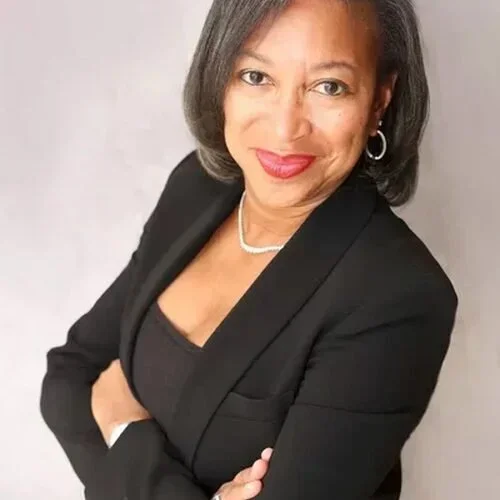
Women in Leadership: SBP Board Member Debbie Veney on Owning Your Leadership
Leadership journeys rarely follow a straight line, and often begin with someone recognizing our potential before we see it ourselves. This Women’s History Month, School Board Partners sat down with SBP board member Debbie Veney to reflect on the moments that shaped her path across corporate, nonprofit, and governance leadership.
From learning the power of advocating for her own growth to building organizations grounded in trust, inclusivity, and courage, Debbie shares lessons about leading with both conviction and kindness—and why this moment calls for women to step forward with bold, values-driven leadership.
Tell me about your leadership journey. When did you first see yourself as a leader, and who helped you believe that was possible?
I think for me it was around the time I turned 30. I had been recruited for a position at another company and was preparing to take it when someone on the leadership team at my current company asked why I was leaving and whether I was unhappy. I told him I’d had a fantastic experience but that I had bigger aspirations and couldn’t stay in the same role forever.
That conversation quickly made its way up the chain, and soon I was sitting with the division president and the CEO. That’s when I learned something I hadn’t known before: they told me I was on their list of high-potential employees and that they didn’t want to lose talent if there was something they could do to help it grow. No one had ever said that to me before, and I hadn’t realized that was how they saw me.
We started talking about what staying could look like. I told them I wasn’t interested in negotiating salary. I wanted more opportunities and broader experiences. I had a vision of someday sitting in a seat like theirs, and I knew I needed to check more boxes to get there. Within 48 hours they came back with a significant promotion and essentially built the role I had described.
That moment really changed how I thought about my career. It taught me the power of speaking up for your own growth, and that sometimes people see potential in you before you see it in yourself.
How has your identity as a woman influenced your approach to leadership and governance?
One of the most important things to me as a woman is to lead with grace and kindness. I think a lot of times women think we have to give that up, that you have to give up the part of you that is loving and kind in order to have an edge and be taken seriously. I just fundamentally don’t believe that.
I have an awesome team of all women, and I’m proud to create an environment where people can show up as their full selves, where women can show up as their full selves without feeling criticized for being fully human and having other people who depend on them. Having that perspective has allowed me to recruit and retain some of the very best talent.
Board leadership of any kind requires balancing conviction with collaboration—how have you learned to hold both?
That is a major balancing act. I think for me, as long as there’s a foundation of trust and shared values, then it doesn't have to be “my way”—there can be more than one correct answer. As a leader on a board, I really think my job, in addition to governance and ensuring the organization is operating ethically, is to support the executive. I never want to be on a board when I feel like I’m in constant tension with the organizational head. But, if your values are aligned and there’s solid trust, it becomes really easy to lean into collaboration and compromise.
What has failure or a setback taught you about your own strength and approach to leadership?
There was a time when I was very adamant about a particular agenda within the sector I was working in. I believed strongly that we needed to do much more community and parent engagement and create a bigger tent. We needed to bring in more people and prioritize inclusivity. I was inside a national organization and spent a lot of time trying to push that agenda forward.
I wasn’t successful in convincing people that it was the direction we needed to go. For a couple of years I kept pushing and trying to prove my point, but eventually I realized I was spending a lot of energy banging my head against a wall.
What I came to understand was that I was trying to convince the wrong audience. Once that clicked for me, I left the organization and started my own company.
The biggest lesson was realizing that I didn’t actually need someone else’s backing or name to do the work I believed in. I already had everything I needed to move forward. A lot of times women sell themselves short in that way. We don’t always acknowledge that we already have what we need to lead.
What kind of leadership do you believe this moment we’re currently living in calls for from women?
Be bold. I think this moment requires courageous leadership and boldness. This is not a time to be meek or hang back in the shadows. We have to be comfortable asserting our voices on behalf of the communities depending on us.
Often, women in leadership roles are leaders in other ways too—in families, in communities, and across volunteer and professional spaces. We have to speak up and advocate for what we see in all those spaces we occupy.
We need to be courageous and willing to stand for the right thing, whether that means pushing for change, embracing innovation, or expanding inclusivity. We cannot be afraid.
How can organizations like SBP better support women leaders in governance?
Intentionality is what immediately comes to mind. The things you are serious about are the things you get done. A lot of times we care about something in our hearts, but if you’re serious about it, you have to be intentional and take action.
That means identifying people who may not yet have a seat at the table, telling them they have something valuable to offer, and creating space for them.
Building a bench of talent is incredibly important. Women of color, and leaders of color more broadly, are still underrepresented in K–12 leadership. The only way that changes is if we intentionally elevate people and make room for them.
Everyone has had someone who saw something in them they didn’t yet see in themselves.
What advice would you give to women stepping into a board position or public leadership role?
My advice would be to understand the things you can learn from people you may not expect to learn from. A lot of times people focus on trying to impress those in higher positions of power. But you’d be surprised by how much you can learn when you build trust with unexpected people.
It’s important to stay open to being mentored by different kinds of people, and to remember that you don’t always have all the answers.